Archive for February 2023

Synthetic textiles – a reliable choice for better sleep comfort

Choosing the right textiles for your bed is about more than style. It’s about long-lasting comfort, a healthy sleeping environment, and materials that are better for both you and the planet. That’s why we choose exclusive synthetic textiles – modern, high‑performance materials designed to improve your sleep.

Moisture management that works – just like in sportswear

Just like the high‑tech fabrics used in sports and outdoor clothing, synthetic materials offer exceptional moisture transport and dry quickly. Cotton, on the other hand, absorbs moisture, becomes wet, and can feel cold and uncomfortable. The same principle also applies to your bed and sleeping environment. Synthetic textiles draw moisture away from the body more efficiently, dry faster, and help maintain a more stable, balanced temperature throughout the night.

Clean, fresh and practical – washable at 60°C

Dust mites are found in every home and thrive especially well in beds, where it is warm, dark, and humid. To remove dust mites and ensure a clean and healthy sleeping environment, bed textiles need to be washed at 60°C. Our synthetic textiles are designed specifically for this. They withstand washing at 60°C, allowing you to easily maintain a clean, fresh and hygienic sleep environment.

Long-lasting quality – comfort that lasts

Our exclusive synthetic textiles are carefully engineered to keep their shape and deliver consistent comfort over time. They resist pilling, hold their structure, and endure far more wear than many natural fibres. Durable textiles mean fewer replacements, less waste – making them a more sustainable choice in the long run.
Wonderland

A robust textile construction

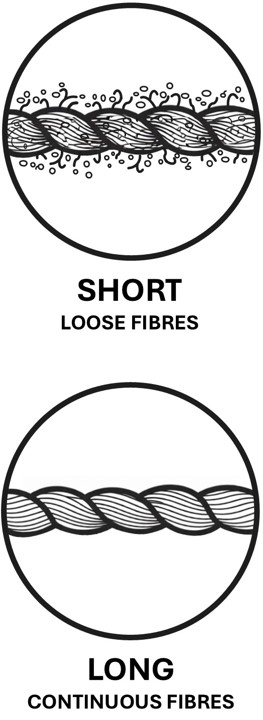
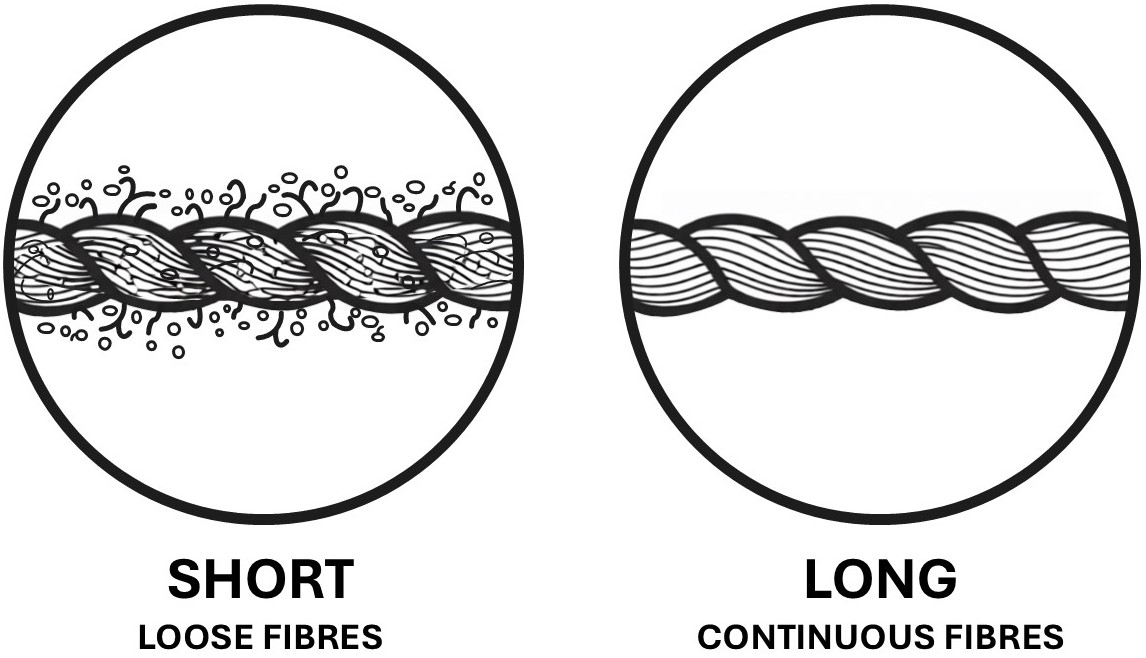
Not all synthetic textiles are the same. Textiles made from short fibres, such as fleece, shed fibres more easily and therefore release higher levels of microplastics during use and washing. Our bed textiles, however, are made from long, continuous fibres that create a highly stable and robust textile construction. This makes the textiles exceptionally durable and ensures minimal microfibre release compared with textiles made from short fibres.
A responsible material choice

Synthetic textiles require significantly less water to produce than many natural alternatives. For comparison, producing one kilo of polyester uses around 60 litres of water, while cotton production requires as much as 10,000–20,000 litres per kilo of textile. Our synthetic HARMOLAN textile takes responsibility even further. With innovative production technology, it can be made entirely without water – significantly reducing resource use. We also actively work to use recycled synthetic fibres whenever possible, giving materials a new life in products designed to last. A choice that’s good for you, your sleep and the planet.

Short and long textile fibres

A responsible material choice

Synthetic textiles require significantly less water to produce than many natural alternatives. For comparison, producing one kilo of polyester uses around 60 litres of water, while cotton production requires as much as 10,000–20,000 litres per kilo of textile. Our synthetic HARMOLAN textile takes responsibility even further. With innovative production technology, it can be made entirely without water – significantly reducing resource use. We also actively work to use recycled synthetic fibres whenever possible, giving materials a new life in products designed to last. A choice that’s good for you, your sleep and the planet.

Wonderland

HARMOLAN – a textile that gives more with less

HARMOLAN is a durable and long‑lasting textile with a strong environmental profile. It is made from polypropylene – a synthetic material derived from residual by‑products, produced without the use of water and with low energy consumption.

Long‑lasting quality

HARMOLAN is naturally dirt‑ and water‑repellent, helping it maintaining both appearance and performance exceptionally well over time. Because the colour is added before the fibres are spun, the textile retains its colour longer than many other fabrics. In addition, Wonderland’s textiles are removable and can be washed at 60°C, making maintenance easy and further extending the lifespan of the bed.

Upcycling of residual materials

HARMOLAN is made from polypropylene sourced from residual by‑products in the petrochemical industry. A previously unused by‑product is refined into small pellets that are melted, coloured and spun into new textile fibres. In this way, waste materials gain new life, reducing the need for virgin resources.

Produced entirely without water

While other textile materials require large amounts of water in production, HARMOLAN is made entirely without water. For comparison, polyester uses around 60 litres of water per kilo of textile, while cotton requires as much as 10,000–20,000 litres per kilo.

Low energy consumption

HARMOLAN is produced at low temperatures, resulting in significantly lower energy use than many other textile fibres.

A choice with lower environmental impact

With HARMOLAN, you choose a textile that combines low environmental impact with high performance: less water, less energy – more quality and more responsibility.

More information:
Synthetic textiles – a reliable choice for better sleep comfort

Wonderland
Wonderland

Nordic Swan Ecolabel – for our top mattresses

Wonderland wants to make it easier to make healthy and sustainable choices. Therefore, we have choosen to certify our Wonderland Top Mattress collection with the Nordic Swan Ecolabel – the official ecolabel of the Nordic countries.

Environmental certification is an important tool to ensure that our materials meet strict environmental requirements. This makes it easier to choose sustainably, and you can feel confident that you are getting a healthy sleep environment.

More information:
Nordic Swan Ecolabel.org

EPD – documentation of a product’s environmental footprint

An EPD (Environmental Product Declaration) gives you comparable information about a product’s total environmental impact – from raw materials to the finished product and through to end of life. The document is third‑party verified and follows international standards, ensuring that the data is accurate and transparent.

We are working systematically to develop EPDs for all our components. A selection of our beds and products will be published on EPD Global – an important step in our commitment to increased transparency, solid documentation, and responsible material choices.

More information:
EPD Global

WondRest – a successful environmental project shaping the bed of the future

WondRest began as an ambitious research project. Today, it stands as one of the most comprehensive environmental initiatives in the Norwegian furniture industry, and as clear proof of how innovation and collaboration can turn sustainability goals into real, measurable results. After three years of research, testing, and close cooperation with experts, one conclusion is clear. It is possible to reduce the environmental footprint of a bed by 50% without compromising on either quality or comfort.

Knowledge driving meaningful change

The WondRest project brought together expertise in environmental science, industrial design, materials technology and sleep research. The involvement of suppliers from across the entire value chain – and our local waste management facility – added essential insight on materials, recycling and circularity. This work created a solid foundation that highlights which factors have the greatest influence on environmental impact – and where improvements deliver the most significant results.

The breakthrough didn’t come from a single solution, but from understanding how everything is connected – from materials and logistics to design philosophy and production methods. Every improvement points in the same direction: longer product life, lower impact and more responsible use of resources. The insights from WondRest now guide strategic and sustainable choices across the business.

Material innovations and improvements

A detailed review of every material in the bed showed that many small adjustments can together deliver a powerful overall result. One example is the increase in recycled steel – from 25% to 75%, replacing 300 tonnes of steel annually. Another is the move to more recycled plastic in key components, equivalent to 23 tonnes each year.

WondRest has also laid the foundation for two recently launched innovations. SkyTex® is a high‑quality foam offering the same soft, premium feel as latex, but with significantly lower transport emissions thanks to local production at the factory next to Wonderland. ests also show that SkyTex® offers excellent long‑term durability compared to other materials.

SoftTouch Pocket is another breakthrough, demonstrating how innovative construction can deliver more with less. The technology combines 70% more pocket springs with 30% less steel, reducing environmental impact while improving support and comfort.

A strong commitment to local production

WondRest further reinforced Wonderland’s focus on Norwegian and Northern European suppliers. Local partnerships reduce transport emissions, increase traceability, offer greater flexibility and strengthen control – resulting in a more robust and transparent value chain. Today, over 95% of our suppliers produce within Northern Europe.

Shaping the future

WondRest isn’t the end of an environmental effort – it’s the beginning. Implementation, improvements and further development are already underway and will continue for years to come.

For us, sustainability is about far more than creating a greener bed. It’s about the bigger picture, and all the small and large decisions we make to improve our products and our everyday lives. WondRest proves that when knowledge, dedication and innovation work together, even a bed can make a meaningful difference. This is why we design our beds with one clear goal: to give you sleep that improves life – for you and for the planet.

The picture above features the people who made WondRest possible – the team of researchers and experts from SINTEF, NTNU, Haukeland University Hospital, Wonderland, Carpenter, Plasto, Måndalen Trevare and J.O. Moen Miljø.

WondRest results
WondRest results

More information:
This is how we will reduce the footprint of our beds by 50%

About WondRest

The largest* environmental project in Norwegian furniture history.
Project objective: Reduce the footprint of a bed by 50% and contribute to increased knowledge about circular economy. Project period: 2020-2023. Project funding: Research Council of Norway, 18 MNOK. Project owner: Wonderland. Project partners: SINTEF, NTNU, Carpenter, Plasto, Måndalen Trevare, J.O. Moen Miljø.

*So far, WondRest is the environmental project in the Norwegian furniture industry that has received the highest level of project funding from the Research Council of Norway..

Circular innovation model for targeted and sustainable development

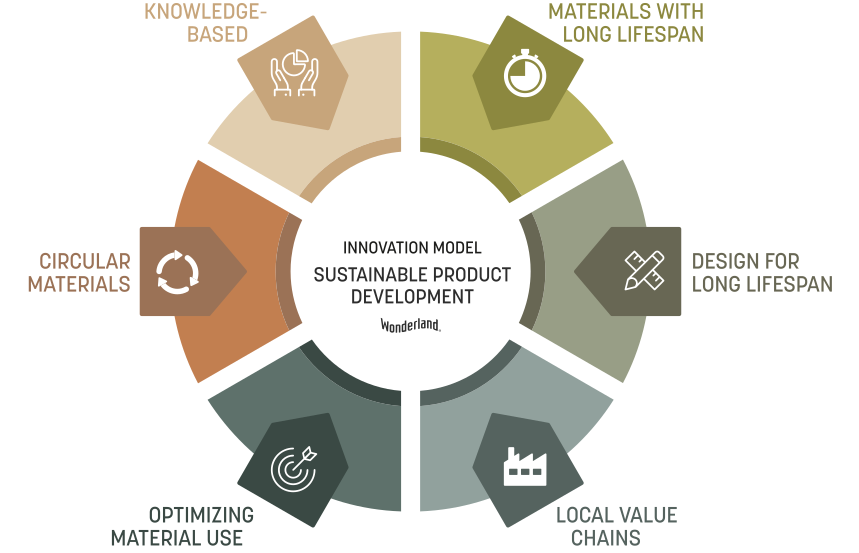
How can we reduce the bed’s environmental footprint – without compromising the premium and long‑lasting comfort Wonderland is known for? The answer lies in how we develop our products. Through the environmental initiative WondRest, we have created a circular innovation model built on six core principles. This model helps us stay focused and develop future‑focused products grounded in knowledge, quality, and responsible production.

Optimizing Material use

1: Optimizing material use

Life‑cycle analyses provide insight into the environmental impact of every individual component. This knowledge enables us to optimize material use both in terms of quantity, material type, and how components are combined. The goal is to create products with lower resource consumption and higher performance throughout their entire lifespan.

Optimizing Material use
Circular materials

2: Circular materials

We aim to increase the share of recycled and upcycled materials wherever possible. At the same time, we work to ensure that all components can be easily separated, allowing them to be taken apart and re‑used in future circular value chains.

Circular materials
Knowledge based

3: Knowledge‑based development

Our innovation efforts across product development, environmental strategy and marketing, are grounded in research and documented insight. By using verified methods and standardized measurements of quality, environmental impact, comfort, and durability, we can develop products that last longer and leave a smaller footprint.

Knowledge based
Materials with a long lifespan

4: Materials with a long lifespan

To ensure that a Wonderland bed maintains the same high level of comfort for many years, all materials are tested against three key criteria: comfort, durability, and environmental impact. How the materials perform together is also essential. We choose high‑quality materials that withstand long-term use while contributing to a lower overall environmental footprint.

Materials with a long lifespan
Design for a long lifespan

5: Design for a long lifespan

A bed should be easy to use and easy to care for. That is why we develop smart design solutions that make it possible to maintain, upgrade, or adapt the product over time. These choices also create opportunities for new circular business models, where products can be repaired, renewed, or re‑introduced into new value chains. Designing for a long lifespan is one of the most effective ways to reduce environmental impact.

Design for a long lifespan
Responsible production

6: Responsible production

Wonderland has a strong commitment to working with high‑quality suppliers in Norway and Northern Europe who uphold strict standards for working conditions, safety, and environmental compliance. Through these partnerships, we aim to positively influence the industry and contribute to the continued development of sustainable production in Norwegian and European manufacturing.

More information:
WondRest – a successful environmental project shaping the bed of the future

Wonderland circular innovation model
Responsible production