WondRest began as an ambitious research project. Today, it stands as one of the most comprehensive environmental initiatives in the Norwegian furniture industry, and as clear proof of how innovation and collaboration can turn sustainability goals into real, measurable results. After three years of research, testing, and close cooperation with experts, one conclusion is clear. It is possible to reduce the environmental footprint of a bed by 50% without compromising on either quality or comfort.
Knowledge driving meaningful change
The WondRest project brought together expertise in environmental science, industrial design, materials technology and sleep research. The involvement of suppliers from across the entire value chain – and our local waste management facility – added essential insight on materials, recycling and circularity. This work created a solid foundation that highlights which factors have the greatest influence on environmental impact – and where improvements deliver the most significant results.
The breakthrough didn’t come from a single solution, but from understanding how everything is connected – from materials and logistics to design philosophy and production methods. Every improvement points in the same direction: longer product life, lower impact and more responsible use of resources. The insights from WondRest now guide strategic and sustainable choices across the business.
Material innovations and improvements
A detailed review of every material in the bed showed that many small adjustments can together deliver a powerful overall result. One example is the increase in recycled steel – from 25% to 75%, replacing 300 tonnes of steel annually. Another is the move to more recycled plastic in key components, equivalent to 23 tonnes each year.
WondRest has also laid the foundation for two recently launched innovations. SkyTex® is a high‑quality foam offering the same soft, premium feel as latex, but with significantly lower transport emissions thanks to local production at the factory next to Wonderland. ests also show that SkyTex® offers excellent long‑term durability compared to other materials.
SoftTouch Pocket is another breakthrough, demonstrating how innovative construction can deliver more with less. The technology combines 70% more pocket springs with 30% less steel, reducing environmental impact while improving support and comfort.
A strong commitment to local production
WondRest further reinforced Wonderland’s focus on Norwegian and Northern European suppliers. Local partnerships reduce transport emissions, increase traceability, offer greater flexibility and strengthen control – resulting in a more robust and transparent value chain. Today, over 95% of our suppliers produce within Northern Europe.
Shaping the future
WondRest isn’t the end of an environmental effort – it’s the beginning. Implementation, improvements and further development are already underway and will continue for years to come.
For us, sustainability is about far more than creating a greener bed. It’s about the bigger picture, and all the small and large decisions we make to improve our products and our everyday lives. WondRest proves that when knowledge, dedication and innovation work together, even a bed can make a meaningful difference. This is why we design our beds with one clear goal: to give you sleep that improves life – for you and for the planet.
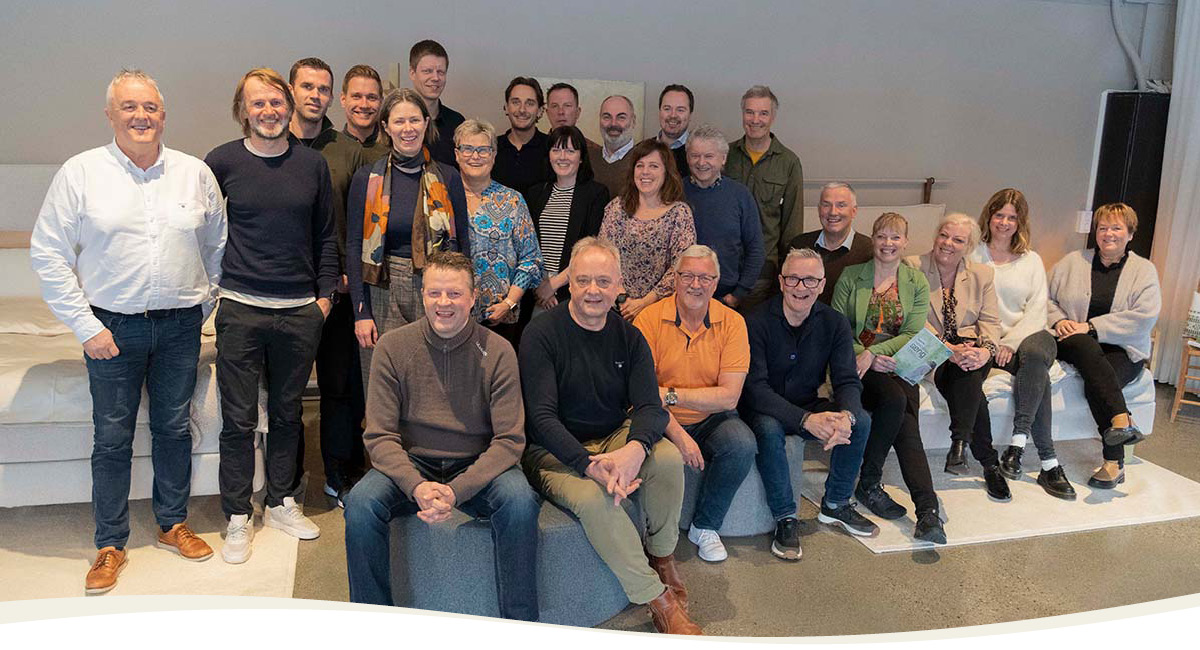
The picture above features the people who made WondRest possible – the team of researchers and experts from SINTEF, NTNU, Haukeland University Hospital, Wonderland, Carpenter, Plasto, Måndalen Trevare and J.O. Moen Miljø.
More information:
This is how we will reduce the footprint of our beds by 50%
About WondRest
The largest* environmental project in Norwegian furniture history.
Project objective: Reduce the footprint of a bed by 50% and contribute to increased knowledge about circular economy. Project period: 2020-2023. Project funding: Research Council of Norway, 18 MNOK. Project owner: Wonderland. Project partners: SINTEF, NTNU, Carpenter, Plasto, Måndalen Trevare, J.O. Moen Miljø.
*So far, WondRest is the environmental project in the Norwegian furniture industry that has received the highest level of project funding from the Research Council of Norway..